Hydrogen Technology
Hydrogen Inhalation Benefits: What the Research Supports
What hydrogen inhalation research actually shows, where the evidence stops, and how distributors can describe benefits without crossing into medical claims.
Someone in your market will ask what inhaling hydrogen does. The brochures in this category answer in one line. This guide takes the longer route, because what you can print in a catalogue depends on knowing exactly where the research stops.
QUICK ANSWER
Inhaled hydrogen has been tested mostly in cells and animals, with a handful of human trials. Consumer inhalation machines are not approved to treat or prevent disease in the United States or the European Union, and we claim no medical approval in any market. Put specification figures in your catalogue and cite research by name.
01 What the Research Actually Shows
Start with the paper most of this literature descends from. In 2007, Ohsawa and colleagues reported in Nature Medicine that hydrogen selectively reduced the hydroxyl radical in cultured cells, leaving alone the other reactive oxygen species that have physiological jobs. In rats with focal brain ischemia and reperfusion, inhaled hydrogen reduced oxidative injury.
Cells and rats, under a controlled experimental injury. That is where most of what followed began.
By 2015 there was enough of it to review. A paper in Medical Gas Research catalogued 321 original articles published between 2007 and mid-2015, covering 31 disease categories and 166 models across three routes: hydrogen-rich water, inhaled gas, hydrogen-rich saline. Where gas was used, it was usually below 4%.
02 Where the Human Evidence Stands
50 patients. One condition. Two weeks. That is the strongest human trial usually cited in this category, published in 2017 in the Journal of Stroke and Cerebrovascular Diseases. It randomised patients with acute cerebral infarction, NIHSS scores of 2 to 6, treated within 6 to 24 hours. The hydrogen group inhaled 3% hydrogen for one hour, twice daily. Over two weeks the authors reported the gas was well tolerated, with improvements in MRI lesion signal, NIHSS scores and the Barthel Index.
A real randomised trial, and a narrow one. It reports published research. It says nothing about any machine sold here.
03 What It Does Not Establish
Three limits are worth naming. Most of those 321 articles are experimental models rather than controlled trials in people. The one strong human design covers a single acute condition, so it says nothing about a healthy adult using a machine at home. And the dose was 3% for sixty minutes twice a day, which is a clinical protocol.
Which leaves a narrow claim to work with: an active research area, early findings, no settled clinical conclusion. Nothing in that literature establishes an effect for a healthy person using a machine at home.
04 The Two Figures Buyers Confuse
Ask any supplier one question and you will learn how carefully they read their own spec sheet. Where was that number measured?
A study reports the concentration of hydrogen in the gas a subject breathes: a small percentage, mixed with air. A specification sheet reports the ratio of gases the generator produces. Both are legitimate figures. They are taken at different points and cannot be swapped.
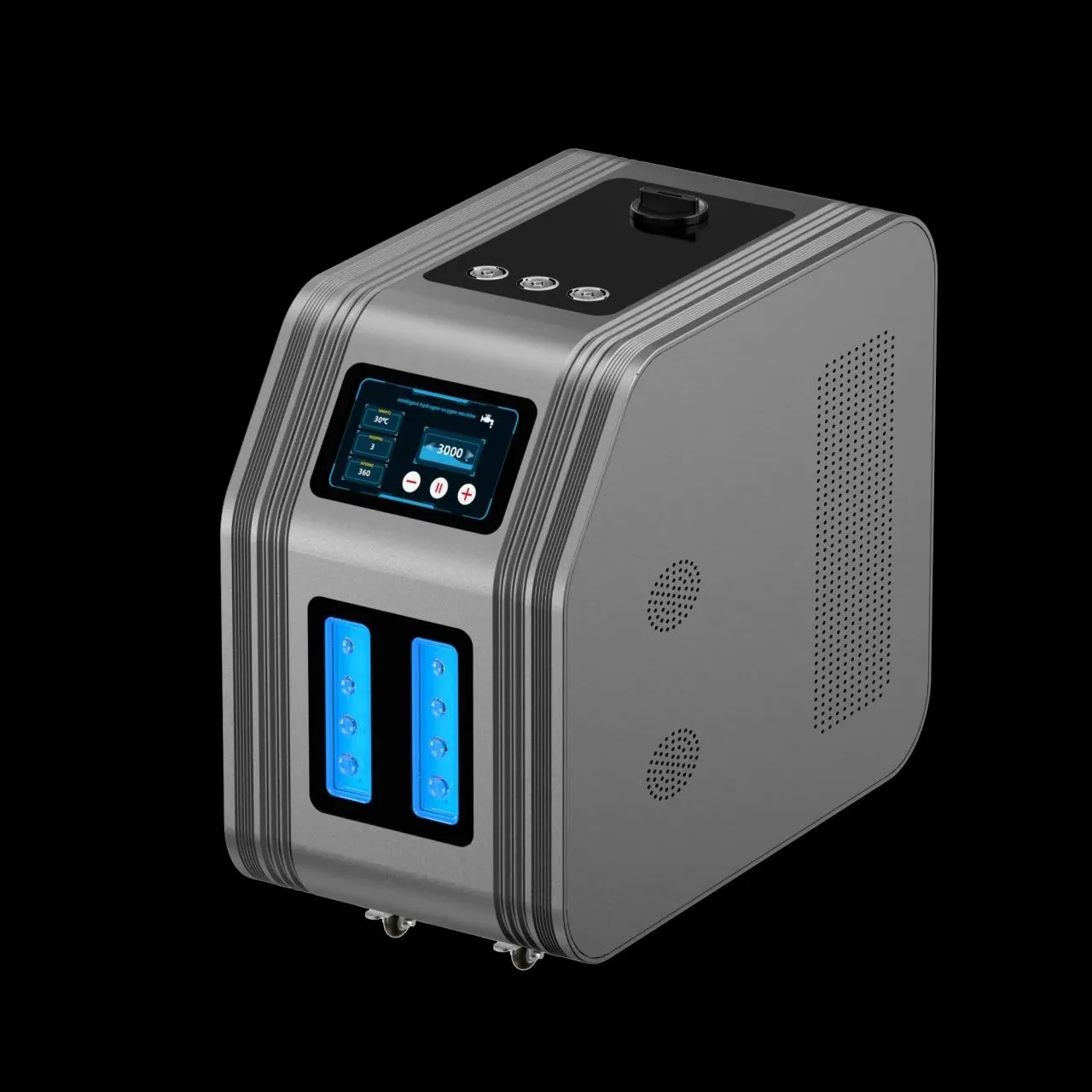
The machines in this range are specified at 99.99% hydrogen purity and a 66.67% to 33.33% hydrogen-to-oxygen output ratio. Those figures describe the gas leaving the generator. How much reaches a user's lungs is a separate measurement, and it is the one to ask about if a buyer raises the question.
05 What You May Say to a Customer
Advertising rules differ by market but converge on one idea: a health claim needs a particular kind of evidence. In the United States the Federal Trade Commission asks for competent and reliable scientific evidence, meaning studies run and assessed objectively by qualified experts, sufficient in quality and quantity, and consistent with the whole body of evidence. For health benefits that generally means randomised controlled human testing. Animal and cell work alone will not carry it.
Name the paper when you cite a finding. Keep the machine in one sentence and the biological outcome in a different one. A disease name should never sit beside your product, in any language, translations included. Claiming an inhaler treats respiratory inflammation creates liability; quoting 99.99% purity and a 66.67% to 33.33% hydrogen-to-oxygen ratio does not.
For comparison work, use the figures that actually differ between models. The 4200ML and 6000ML machines sit in the same 320 by 340 by 490 mm housing and differ by one kilogram of net weight. Put those two side by side in a quote and the buyer sees the difference without asking twice.
Next Step
If you are evaluating this category and want the specification sheet and the research references in writing before you commit to stock, send us the models you are considering and the market you sell into through the contact form.
Guangzhou Baijiale Import and Export Co., Ltd has built hydrogen products since 2019, covering research, development, production, sale and service of hydrogen inhalers, hydrogen water bottles and cups, and PEM hydrogen generator membranes.