Buyer Guides
How to Clean a Hydrogen Water Bottle Without Damaging It
Rinse, dry, backwash: what the specification sheets state about cleaning a hydrogen water bottle, and which common habits risk the electrode.
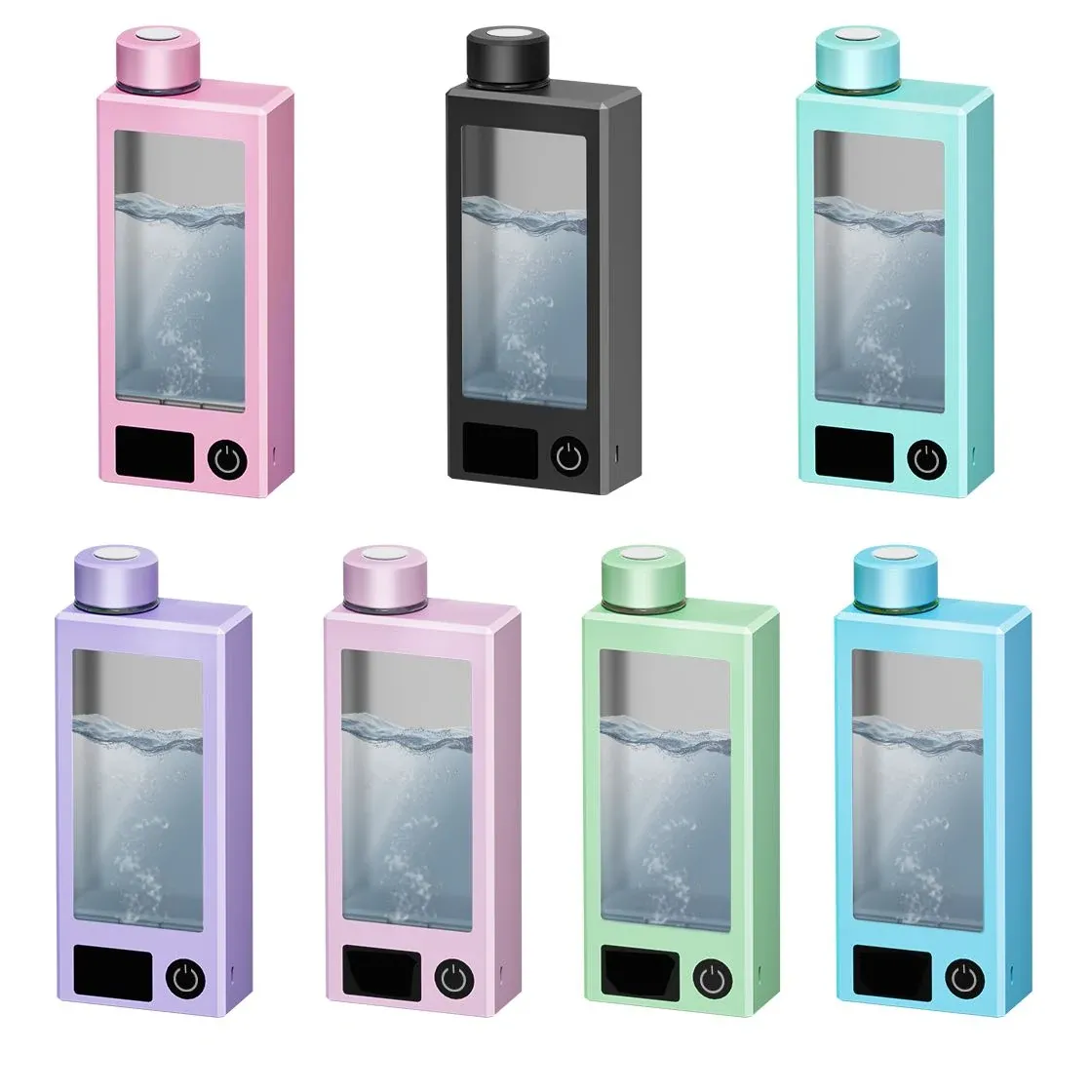
A hydrogen water bottle is a small electrolysis cell in a drinking vessel. That one fact explains most of the cleaning advice, and it also explains why some common habits are worse than doing nothing.
QUICK ANSWER
Rinse it after every use and let it dry open, keep water within your model's stated temperature range, and use the backwash function where the model has one. Never put the base in a dishwasher, and never soak the electrode assembly. For cleaning agents and descaling, ask the seller for the model's own instruction sheet, because that detail is not published on this range's specification pages.
01 Start With What the Specification States
Three specification values drive every cleaning decision, and all three are published. The water temperature range is stated as 0 to 60 C on the BJL-HW01, BJL-HW05, BJL-HW06, BJL-HW07, BJL-HW08, the BJL-15 and the pitcher. The body material is food-grade PC with an aluminium alloy body on several models, a 316 stainless steel liner on the BJL-HW08, and alumina with PC on the BJL-15, BJL-16 and BJL-17. The electrode specification is stated on several models, for example six layers of platinum titanium on the BJL-HW01 and BJL-HW08.
Where a model states a 0 to 60 C range, anything above 60 C is outside the specification. That rules out boiling water, hot water straight from the tap or the kettle, and steam cleaning, all of which are the first things people reach for when they want something really clean. If your model's page does not state a temperature range, ask the seller rather than assuming one.
02 The Routine That Does the Work
Empty the bottle as soon as you finish drinking. Water left standing in any vessel grows a biofilm, and in a vessel with an electrode assembly it also leaves mineral residue to dry onto the surfaces. A rinse with fresh water and a shake is enough for daily use.
Leave the lid off to dry. A closed, damp bottle is the one condition where a smell develops, and it has nothing to do with the electrolysis. If a smell has already appeared, a rinse and a full air dry usually clears it without any cleaning product.
03 What the Backwash Function Actually Does
Two models in this range state a backwash function: the BJL-HW08 with automatic backwashing, and the BJL-16 touch screen with a back-flush. On both, the function reverses the flow direction to flush the electrode area rather than the drinking chamber. It is a maintenance cycle, not a cleaning cycle for the bottle body.
So run it on the schedule your instruction sheet gives, and still rinse the body by hand. Expecting the backwash to clean the whole bottle is the most common misconception about this feature.
04 Where Residue Shows Up First
Mineral residue appears on the electrode and around the seal before anywhere else, because that is where the water is being split. On a model with a visible electrode, you will see a pale film build up over weeks. That film is why the backwash exists.
Two habits slow it down: use the same water source consistently so you know what you are putting in, and do not leave a full bottle standing for days. Neither habit requires buying anything.
05 What Is Not on the Specification Sheet
The specification pages for this range state temperature, materials, electrode and working modes. They do not state which cleaning agents are approved, how often to descale, or whether a given descaler is acceptable on the electrode. Those are real questions with real answers, and the answers belong to the model's instruction sheet rather than to general advice.
That matters because the safe answer depends on the model. Some electrode coatings are sensitive to particular agents, and the specification page will not tell you which. Ask the seller for the instruction sheet for your exact model number before you put anything other than water inside the bottle.
Next Step
If you own one of these models and want the instruction sheet that covers cleaning and descaling for your exact model number, send us the number through the contact form and we will send it. If you are still choosing a model, the ones with a stated backwash function are the easier ones to keep clean over time.
Guangzhou Baijiale Import and Export Co., Ltd has built hydrogen products since 2019, covering research, development, production, sale and service of hydrogen inhalers, hydrogen water bottles and cups, and PEM hydrogen generator membranes.